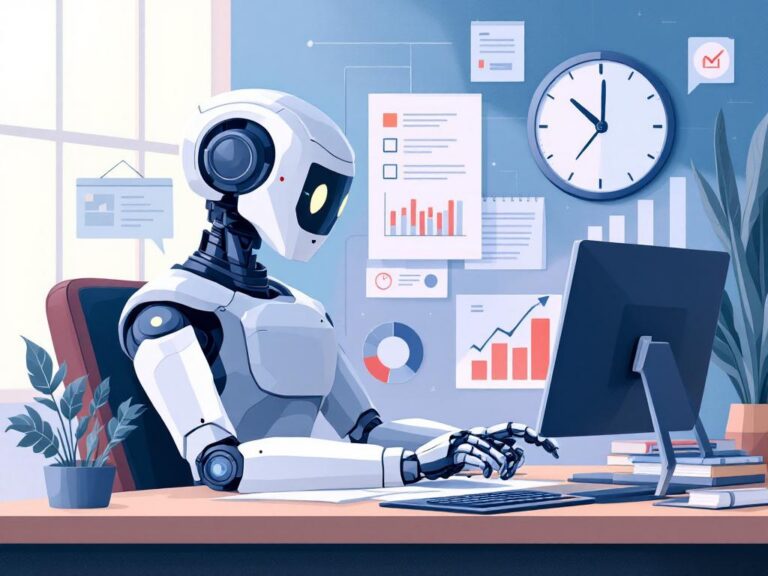

Do you really need an AI engineer?
The right specialist for the right task — and what most job postings get wrong
When a business leader decides it is time to bring AI into the company, the first instinct is almost always the same: “We need to hire an AI engineer.” LinkedIn listings, consultancy recommendations, and industry articles all push this term to the front. The result: many businesses hire or commission an expensive, overqualified specialist — while what they actually need is an entirely different set of skills.
This is not a criticism. It is a recognisable and understandable market confusion. But it is worth thinking through carefully.
What does an AI engineer actually do?
An AI engineer — whether called a machine learning engineer, data scientist, or AI developer — works at the level of algorithms. They build and fine-tune models, design data pipelines, write Python code, and optimise neural networks. This is genuinely valuable expertise — but in a very specific context.
It is the right profile when:
- a proprietary AI model needs to be built or an existing one fine-tuned for a specific domain,
- the work involves datasets of tens of millions of rows,
- AI is at the core of a tech startup or enterprise product,
- the project is framed as research and development.
It is not necessarily the right profile for what 80% of SMEs actually need.
What do small and medium-sized businesses actually need?
A small business does not want to develop a model. It wants its workflows to take less time. A law firm or accounting office does not ask for a neural network. It asks for incoming client documents to be processed semi-automatically. A medical practice does not need a data pipeline. It needs patient information, referrals, and administrative processes to be intelligently supported.
These are real needs. Valuable ones. Solvable ones. But solving them does not require algorithm development — it requires process knowledge, tool knowledge, and the ability to connect the two.
That is precisely the competence a No-code & AI Product Builder / AI integrator represents.
The two profiles compared
| Criterion | AI Engineer | Product Builder / AI Integrator |
| Core activity | Building and optimising models | Analysing workflows, integrating AI tools |
| Technical foundation | Python, ML frameworks, mathematics | No-code tools, workflow automation, RAG |
| Client contact | Rarely works with end users | Client process and needs are the starting point |
| Typical project | Developing a proprietary model | Fitting existing AI tools to real business needs |
| Monthly cost (employed) | €3,500 – 6,000+ per month | Project- or retainer-based, fraction of the cost |
| Deployment speed | Weeks to months | Days to weeks |
The root of the confusion
The problem is partly conceptual. The word “AI” simultaneously refers to a technical discipline and an application layer. When someone says “we need an AI specialist”, they are usually thinking of the application layer — but market reflexes surface the engineering layer first.
An analogy: if a business needs a company car, it does not look for a motorsport engineer — it looks for a driver who knows the roads, understands the destination, and gets there safely. The F1 engineer’s expertise is exceptional — but the role is different.
The relationship between an AI engineer and a Product Builder is roughly the same. Both are needed — but not in the same context.
Is this starting to be recognised?
The market is moving, slowly but clearly. France Compétences listed the “Product Builder no-code & AI” profile among emerging professions in both 2024 and 2025. France Travail specifically recommends this profile to SMEs in law, accounting, and healthcare as one answer to the developer shortage. The number of no-code and AI integration projects grows year on year — and more and more business leaders are realising that the person they were looking for is not the one with the most years of study, but the one who best understands their problem.
This realisation has not yet become mainstream. But the business that gets ahead of the market today starts tomorrow with an advantage.
ArkeoAI’s position
ArkeoAI represents exactly this position. We do not develop models — we fit existing, proven AI technology to the real workflows of regulated sectors: law, accounting, healthcare. Fully offline, on a local network, with data staying on-site. Not a general-purpose chatbot, but a task-specific system.
Our working method: parallel application of multiple AI models, critical synthesis of results, then configuration tailored to the client’s processes — where domain knowledge and effective client communication weigh at least as much as the technical toolkit. This approach cannot be taught in three months, and no algorithm development diploma replaces it.
What we provide: the part that matters in practice. From problem analysis to deployment, in the client’s own language — without launching an IT project.
Not every AI task requires an AI engineer. But every AI deployment requires someone who understands what is happening in the business and can see how to automate it intelligently. These are not the same competence.